Leadership + Teamwork Lessons from Toddlers | Dr. Hasan Merali
What if the most powerful leadership and teamwork lessons were hiding in plain sight? In this episode of the MAGICademy Podcast, Dr. Hasan Merali reveals how reconnecting with childlike play, curiosity, and confidence can transform how adults lead, collaborate, and create.
Leadership advice usually comes wrapped in frameworks, metrics, and productivity hacks. But in this conversation, the spotlight shifts away from boardrooms and toward playgrounds. The core idea is surprisingly simple: toddlers already embody many of the qualities adults spend years trying to relearn.
Dr. Hasan, a pediatric emergency physician trained at Harvard and Johns Hopkins and now practicing at McMaster Children’s Hospital, has spent years observing children not only in research but in real-life moments of risk, recovery, and resilience. His work and his book Sleep Well, Take Risks, Squish the Peas: Secrets from the Science of Toddlers for a Happier, More Successful Way of Life reveal that ages one to five represent a “golden window” of human capability, when confidence, creativity, and collaboration naturally thrive.
-
The way children think about play is very different. There's no schedule. There's no specific goals. And they're having a lot of fun doing that. And when you look at the adult data of adults who are able to truly play, it's incredible. They have decreased stress. They're able to manage stressful situations better than other adults.
and all kinds of benefits that we could also get if we learn from them, learn to become a little bit more unscheduled and spontaneous like they are.
Jiani (00:28)
Welcome to MAGICademy podcast. Today with us is Dr. Hasan Merali He has been trained by Harvard Medical School, Johns Hopkins
currently practices in the Department of Pediatric Emergency in McMaster Children's Hospital. He has been devoting his professional life, academic life and practical life in researching ways to actively prevent
injuries for kids and he has been published over 25 peer-reviewed research journals and his work being featured among a lot of major media outlets such as Boston Globe, CNBC, NBC, CBC, you name it, New York Times also and he's recently wrote a book launched in March 2024 about how kids can teach adults to be better and happier
human beings.
Beep beep beep. A spaceship lands in front of you. Out walks a friendly alien. If you were to use one word, one sound, or one movement to introduce yourself, what would that be?
Hasan Murali, MD (01:39)
playful.
I think it's a really important way to start. And it really, I think, embodies what I want to talk about and the book that I've written. You the title is Sleep Well, Take Risks, Squish the Peas, Secrets from the Science of Toddlers for a Happier, More Successful Way of Life. And that squish the peas part is really where the playfulness of toddlers comes in. And it's such a way of being for them and helps them.
Jiani (01:59)
You
Hasan Murali, MD (02:07)
build relationships immediately that, you know, in your example, if there was some alien that landed, it would be the best way to make that connection.
Jiani (02:22)
so why toddlers why leadership and how are these two things connected at all?
Hasan Murali, MD (02:28)
I think they're highly connected because a lot of the habits that toddlers, and I use toddlers a little bit more broadly. When I say toddlers, I really mean toddlers and preschoolers, this magical age between age one and five. The way they live, so toddlers are one to three and preschoolers are three to five. And so the data that I looked through and that I'm going to talk about today and that the book is based on is really
Jiani (02:40)
Why age 1 and 5?
Mm-hmm. Mm-hmm.
Hasan Murali, MD (02:53)
this age that's one to five where they've passed that infancy stage and they're able to do a lot of things on their own. And before they start to lose some of the magical abilities that they have, that young children have that we unfortunately decrease when we get to be adults. But to answer your question about leadership, I think one of the best ways that we can see this day to day and one of the reasons that kind of inspired me to write the book
was how good they are at risk taking and how confident they are. You know, I work in the pediatric emergency room and a lot of what I do with little kids is repairing lacerations, so different cuts they sustain because they think they can fly and fixing a lot of fractures because they are just willing to take any type of risks on the playground at wherever they are. yeah, and it's funny in a way and it can be serious. Most of them recover just fine.
Jiani (03:38)
yes, that's true.
Hasan Murali, MD (03:45)
But it's really amazing to me at how they think of themselves. And you know, there's been study after study, and I mean, 50 years of data about how toddlers perceive their own abilities. And one that comes to mind, that's just a very famous one, it's from the University of Wisconsin. They had preschoolers, third graders, and adults do a memory test. So they had to look at these cards, and then had to guess how many they remember on the next one. And so adults were a little bit overconfident, 6%.
Third graders, 22%, but the preschoolers, 147%. They just think they can do more and do better than almost anyone. And although it's not completely matched with reality, that allows them to take those risks, do new things all the time, learn and grow at a pace that doesn't compare to anyone else in society.
Jiani (04:18)
You
when toddlers play, the way that they play, are they similar to if adults were, you know, our childlike wonder will...
reawakened if we would play together are they gonna be same are they gonna be different
Hasan Murali, MD (04:45)
Yeah, it doesn't matter exactly how it's done. The point is to be playing and that's where adults get stuck because it's not the way they're doing it. It's just that the fact that they're not playing. Part of the reason for this is we start to develop, of course, this prefrontal cortex, which helps us plan, think about the future. And so we're very much stuck in our calendars and scheduling. Yeah. And planning and making sure that there's
Jiani (05:05)
evaluating.
Hasan Murali, MD (05:10)
goals, for example, for everything we have. And the way we think about play, The way children think about play is very different. There's no schedule. There's no specific goals. And they're having a lot of fun doing that. And when you look at the adult data of adults who are able to truly play, it's incredible. They have decreased stress. They're able to manage stressful situations better than other adults.
and all kinds of benefits that we could also get if we learn from them, learn to become a little bit more unscheduled and spontaneous like they are.
Jiani (05:43)
The opportunities for adults to play freely without the burden of schedules and responsibilities and timelines are usually rare
Hasan Murali, MD (05:49)
Mm-hmm. Mm-hmm.
Jiani (05:52)
how can we facilitate that sort of play?
Hasan Murali, MD (06:01)
we really need to make the time for it. after we've done that, like we need to do for a lot of things that toddlers and preschoolers are amazing at, like reading books, for example. I mean, they're reading every single day and it's one of their passions. And so hopefully adults can do a little bit more about that because I think that's another great lesson we can learn from them. But to your point on play specifically, the time is challenging. Everyone has to make time for different things. I'll speak a little bit.
Jiani (06:01)
Mm.
Yeah.
Hasan Murali, MD (06:28)
to that, but more importantly, it's what we do.
So let's say you're able to find 30 minutes. Hopefully everybody can find 30 minutes. I'm going to leave you with an interesting study and hopefully something very practical to take away for your listeners and viewers. So there's a study in North Dakota University. This is young adults, undergrad students. They had to write for seven minutes and the task was you have the day off, write about what you're going to do. And so that was one group of students.
Jiani (06:39)
Mm.
Mm.
Hasan Murali, MD (07:01)
Then there was another group of students. They were told the same thing, but they were told to think as a child. And then these writing samples were compared and the differences were amazing. You know, the first one, like you were talking about, focused on obligations. And I'm talking about a day off here, but they focused on cleaning, checking email, maybe checking into work. And the same adults, the same peer group who were thinking as a child thought of going to the park, visiting their
Jiani (07:16)
video
Ha
Hasan Murali, MD (07:27)
grandparents, and of course throughout the day playing with this person, playing with this person, playing with this person. So one idea that I will leave your listeners with is the next time you have even a small amount of time, instead of thinking what you would do, think about what childhood you would do and actually do that activity.
Jiani (07:44)
ice cream.
Hasan Murali, MD (07:44)
Well, yeah, that's funny because that's one of the things that was mentioned as well. But yes, there are unhealthy eating habits, but yeah, that can be part of the fun.
Jiani (07:53)
Yeah, and nature, going to the nature.
Hasan Murali, MD (07:55)
See?
Amazing that that was one of the first thoughts that came to your mind, right? Is being in nature. And now we have so much good data about forest bathing for adults, for example, and all the wonderful things that can happen if we just spend more time outside, spend time around trees. And that's just something that just naturally came to us when we were little. We just wanted to be outside. We wanted to be in playgrounds. We wanted to be in nature.
Jiani (08:01)
Yes.
how would a toddler leader approach, creativity and innovation and how do we measure the impact as well?
Hasan Murali, MD (08:27)
Yeah, I have a couple of good examples there. you know, they're very creative people and that's just how they are and what creativity I think means to them and to me is trying a lot of ideas. The innovation comes is the outcome of that. Once you've tried a bunch of things several times and you figure out what works or what maybe other people are interested in it, that thing is the innovation. So one of my favorite examples of this is something called the Marshmallow Challenge. And if you haven't
Jiani (08:33)
you
Hmm.
Hasan Murali, MD (08:54)
Seen this TED Talk, And so what it is, the Marshmallow Challenge, is you have 20 pieces of spaghetti, a yard of tape, a yard of string, and one marshmallow. And your objective is just to build the tallest tower you can. That's all you get, and that's all you have to do. And so different groups were given the same challenge. Engineers, CEOs, lawyers, business school students.
and kindergartners. And these young children, the kindergartners outperformed business school students, lawyers, almost all of the adults except for the engineers and CEOs, but only if they had an admin assistant. And so what that experiment shows us is that these young children with their way of being creative all of the time and just consistently trying different things that might work.
are actually some of the most innovative people because their towers, the thing they created from all of their iterations were some of the best and that's with no experience. So I think that creativity can definitely get us to innovation.
Jiani (09:56)
is if all the leaders, engineers and CEOs or people leaders who can adapt this side of creativity like a toddler, everything that they do will probably be like innovation-wise or creativity-wise, it's going to be kind of exponentially increased.
Hasan Murali, MD (10:13)
Yeah, and I also have another practical suggestion if your listeners want to try it because I just love this other study. from Sweden and they had all of these adult meeting groups and this is a wide range of industries. So we're talking healthcare, government, all kinds of industries and in these meetings they split them up into two groups. The people themselves didn't exactly know why this was happening but halfway through the meeting in one group they put
Jiani (10:17)
Yes, please.
Hasan Murali, MD (10:39)
some fruit and a bowl of chocolates. And in the other group, they put some fun items, just put them on the table and didn't say anything, just left them there. So like a foam dart gun, a stick on mustache, and a game that was just written on a piece of paper that anytime someone touched their face in the meeting, you'd raise up your hands and say, life is fantastic. And so they did this. They let the meetings continue as they would. And then they rated what they called the meeting creativity climate.
Jiani (10:57)
haha
Hasan Murali, MD (11:05)
And what this rated was collaboration, openness of the meeting, openness to new ideas, engagement and participation. And they found that just putting those playful items on the table in a wide variety of different meeting groups increased the creativity of that meeting. So introducing more play in that simple way and a lot of other ways that we can kind of get back to our childhood selves is really powerful.
Jiani (11:36)
So in your book, you also mentioned about a framework that measures creativity. How do we exactly measure creativity?
Hasan Murali, MD (11:44)
it's a very difficult thing to measure. The one measure that has been created is called an abbreviated Torrance Test for Adults, ATTA. And I'll tell you what's fascinating about it. I'll just explain it briefly. So there's three parts of it. The first step is you give someone a just suppose scenario. Like for example, just suppose you could walk on air and then they have to list all the problems they might run into.
So something hypothetical, that's not possible. And then they have two other scenarios where they're drawing tasks. They're given lines and triangles and they have to complete different drawings in the most creative way they can think of and give it a title. it's an interesting test to me because when I read about this, I'm like, that's what toddlers and preschoolers do all the time. I have a four-year-old and she's always thinking about, what if I could walk on air? I mean, this is going through her mind and she's asking questions about...
Jiani (12:34)
You
Hasan Murali, MD (12:35)
all of this all the time and her drawings are just incredible the way she's able to put different shapes and colors and patterns together and so it's a hard thing to do but toddlers do it best.
Jiani (12:47)
In your book, you described how toddlers can be great team players. As adults, we're still struggling as teams and companies are made of different teams, small teams, big teams. And we talk about there are different silos, we need to be better and collaborative.
Hasan Murali, MD (12:46)
Mm-hmm.
Jiani (13:01)
What kind of leadership or, kind of team member characteristics of a toddler that is inspiring and really kind of deserve adults to be attention and learn from?
Hasan Murali, MD (13:14)
Yeah, I think this is one of the places where they shine and I have a whole chapter dedicated to it, which is actually my favorite chapter in the book is about teamwork. So a lot of this data comes from Michael Tomasello, who's a professor of psychology at Duke and Felix Warnekin, who is also a professor of psychology at University of Michigan. And they did all these experiments where they have toddlers and preschoolers engage in what are called joint tasks. So the young child
Jiani (13:22)
Yes.
Hasan Murali, MD (13:40)
and that adult are paired. They have a project they're gonna work on together, they both understand it. And then 10, 20, 30 seconds into the project, the adult just stops working. And then they're watching the young child decide what they're gonna do about this situation where they have a commitment with someone and we're trying to do something and what's gonna happen next. And I think it really, these experiments really get to the core of what they want to do and what they focus on and what that is.
is the project itself. They actually don't care as much like adults do about the end product. They're focused on the moment. What can I do right now to make sure this team functions as efficiently as possible? And so what's really sweet about it is first they have this partner who has just stopped working. So they have very clear communication. In their language, man, someone they don't know. They're addressing the person directly.
And then they're giving instructions. So, you know, one of the things is called an elevator task where they have to lift a ball and get it out. So they're saying, man, lift it. And so I think that's number one. They have very, very clear communication. There's no blame, just very neutral, address the person and talk about what needs to be done. So that doesn't work. The adult is still just there and they're worried about why this is not happening. So they walk over and they gently assist the person. They kind of show them this is what you need to do.
And I think that's the second big takeaway, which is, think, actually really beautiful because we often get into this phase where we're worried that someone's not working and we're thinking like, they are lazy or they don't want to do this, but actually maybe they just didn't understand the instructions. And so what toddlers do is they walk over and explain to the person about what needs to be done.
Jiani (15:15)
Mm.
Hasan Murali, MD (15:19)
And in these scenarios, sometimes the equipment breaks. toddlers are known for tantrums, and we could talk about that, but they don't break down and don't have a meltdown like a lot of adults do with computer failures and equipment failures. They kind of just brush it off and try to figure things out. And I think one of the most important parts of this is that if the project doesn't work out, they always use the term we. They never say that person, he, man, stopped working. That's why we didn't get it done.
they think of their whole team really nicely. And so we didn't do it. We didn't finish the project. And so I think there's a lot of important lessons in teamwork there. And I have a lot more if you want to talk more about that.
Jiani (15:48)
music.
Hasan Murali, MD (16:04)
Okay, so my next example is there's a researcher at MIT, his name is Sandy Pentland, and he wanted to look at what makes the ultimate team member. So he did something very fascinating. He developed these sociometric badges. So they're about the size of a cell phone, a small cell phone, and people wore them around their necks. And they didn't measure what people were saying, but they measured how people were talking. So they can measure movement, for example, when people were nodding or moving their body.
They measured how people spoke their tone. They could measure other people around them, how many people got a turn to speak when they stopped speaking, that kind of thing. And what they found, what he found was quite amazing because he looked at how people were productive. And I don't get to that. But there were three really important pieces to communication, which I think are embodied by toddlers. So...
Jiani (16:57)
Mm-hmm.
Hasan Murali, MD (16:58)
Dimension number one was energy. So people who were more engaged, nodding, smiling at the other person or moving their body. That was number one. Number two was engagement. So that really meant making sure that other people that were around, they're really hearing from everyone and not just dominating the conversation or letting one person dominate, which is an issue for leadership. And then finally was exploration.
Jiani (17:21)
Hmm.
Hasan Murali, MD (17:23)
And that really meant talking to other teams, making sure that they weren't just focused on their own team. They were going around to the other teams and getting those things, getting the other information that they needed. And so I think that really highlights what young children do when they talk and when they engage with people. They have a lot of energy. They have a lot of engagement and exploration, you know, pretty much defines every little kid because that's all they're doing. So what was really fascinating
is that he put these sociometric badges on these business leaders at a party. And five days later, they had a pitch competition for something they had created. And without knowing what was said at the party, only the movements, tones, these kinds of things, the winners were able to be predicted with 87 % accuracy.
So it was quite incredible and it just shows the importance of everything nonverbal that we're doing and that toddlers are so engaged with and exploring and having the energy all the time.
Jiani (18:28)
can you walk us through a visual story where, assuming that we're in this perfect world where
All the adults are learning and actively learning from toddlers and having their inner child like wonder reactivated or the inner child leadership reactivated. What would.
normal work life be for maybe a leader of a startup company or a director of a large size company or executive director or CEO?
Hasan Murali, MD (18:59)
I remember this was all of us at some point in our lives and there's been a lot of changes that we go through in our brains and in our lives and we kind of lose some of these things. so, you know, I'll highlight some of the most important ones because we haven't talked about them or touched on them yet. And I'd say one of the most important is laughter. You know, laughter is really about building
Jiani (19:02)
Yes.
Mm.
Hasan Murali, MD (19:23)
bridges with people and it allows people to relax. allows people to open up. It allows people to share those ideas that you really want and get creative about. you know, when we look at the data around how much laughter young children have compared to adults, it's twice as much, twice as much. So that's certainly something we can try in whatever way we can to bring into our own lives and by extension to others as well.
Another thing absolutely important and that we've really lost is asking questions. And it is hard because we feel a little bit shy to ask the questions that we want to know about. And we think that, maybe this will maybe not look good or look in a certain way. And young children just don't have that. And again, they're asking questions all of the time because they're not focused on what other people are going to think of them. They're focused on learning.
and getting to the answer. And so for leadership, I think it does two things. So first, of course, it gets you to the answer and maybe gets you to the right person that you need to be working with. But number two, like laughter, asking questions is a relationship building tool. And we know that it helps in all kinds of relationships. Asking those follow-up questions is critical. And so asking more questions, I think, is another one.
It's hard to think about and hard to implement initially, but once you do it, it's quite amazing and that's self-talk. So little kids are always talking to themselves. They actually talk to themselves out loud. And after about age five, that kind of fades away, but you can hear them like whenever they're working on anything, they're talking to themselves. And there's been some really great research and a great book called Chatter by Ethan Cross, who's at the University of Michigan.
And he talks about how we can use self-talk and actually improve a lot of things in our lives. And the simple way to do that without getting into too much detail is to talk to yourself in second or third person. So instead of what is Hasan feeling, sorry, what am I feeling? You ask yourself, what is Hasan feeling? And when we do that, especially in stressful situations, that actually decreases our emotional reactivity.
Jiani (21:23)
you
Hasan Murali, MD (21:29)
And another way that it's really important is all the negative self-talk we get into. Why didn't you do this? Why did you do that? It's really hard and it doesn't help us and it holds us back. And if you just reframe it and you talk to yourself, like you would be talking to a friend. It's a completely different conversation. And the way we self-talk is another fantastic lesson that we can learn from preschoolers and toddlers.
Jiani (21:53)
I
we get those like negative mind chatters a lot on a day to day basis and we sometimes don't even know where those come from how do we effectively switch out of that super criticizing kind of inner talk
Hasan Murali, MD (22:16)
Yeah, it's not easy. And I'll say it takes some practice and it can be hard for people because they're just not used to it. But it doesn't have to be out loud. And so that's one big benefit. You can do it in your head if you want to, but you really need to be deliberate about it. So hopefully you can catch yourself in those moments because we all know when they are. And they're usually at the end of the day when you're in bed and you're thinking about the day or right after a conversation or something that happened, like after recording a podcast.
Jiani (22:25)
Hahaha
Hasan Murali, MD (22:43)
And you start to realize some of those moments that you have and reframing the way you talk to yourself can be incredibly helpful. But just trying to catch yourself and changing your mindset and the words you're using with yourself is very powerful.
Jiani (23:00)
Good.
as we practice it is often enough we're able to faster and faster switch out of that mode and then say, hey, Jiani you're doing pretty good job. Look at that. I was like, yeah, you know,
Hasan Murali, MD (23:11)
Yeah. Yeah, and I loved how you
said your own name. Perfect. You're on the right path.
Jiani (23:21)
So we've talked about why Dr. Hasan started to explore the leadership perspective of a toddler by seeing them taking great risks in the playground, even though some of them end up
injuring, he's helping them to prevent future injuries.
One thing that really kind of stood out to me is give yourself
30 minutes, maybe on a daily basis, maybe every other day, maybe every week. Think in terms of how can you make the 30 minutes play playful like a toddler would do rather than just a spare time.
Another important message sometimes when we're thinking about creativity and innovation, it's usually separate. However, according to Dr. Hasan, it's really not. It's a process. It's a continuing process. It starts with creativity. It starts with different ways of trying and playing and just testing.
And I think the conclusion of it is being toddlers, which we've been for a period of time in our life that they really carry this natural abilities to lead not only themselves, but also others.
Hasan Murali, MD (24:30)
Yeah, I think I was a little bit older when I started playing with these maybe seven or eight. It was something called Meccano. I don't know if your listeners are aware of this. It's a construction toy where you have all these little pieces of metal and there are screws that go in and little screwdrivers and it's like a type of Lego, but a little bit more detailed and you can make cars and houses and whatever your imagination can think of. And I remember doing that for
hours and hours on end and I recently found this set my parents had kept it so it brought back a lot of good memories and I looked it up today because you had asked about it and they still have some small kits too so yeah it's a really great playset.
Jiani (25:11)
Do you have it with you?
Hasan Murali, MD (25:12)
Yeah, I kept it. I don't have it here right now, but yeah, I definitely kept that because that was my favorite toys
Jiani (25:15)
Yeah.
I see. Do you get to give yourself 30 minutes to play with it?
Hasan Murali, MD (25:22)
I did that day and I certainly incorporate a lot of play into my day. I'm very lucky that I have a four-year-old. So right now it's very easy because I can just ask her what we should do and she'll think of something always very fun that we always go and do. So yeah, today it was riding around on the scooter so we did that.
Jiani (25:31)
complete.
I love that. what role does Childlike Wonder play in your life and how do you keep that alive?
Hasan Murali, MD (25:45)
Yeah, so also just very lucky to have a little one right now. I think it's going to be more challenging when she's a little bit older, but it's helpful to have someone who has an imagination like her around me because just the smallest things are just so fascinating. And, you know, I remember when she was two years old and we used to walk to preschool, just looking at the clouds on the way to preschool was just, was just a fascinating experience. And so
For me, think that how I just maintain this is trying new experiences now. Because I remember her going through all these new experiences, I think that was very special. So with her and on my own new experiences.
Jiani (26:24)
Overall, what do you think is your magic?
Hasan Murali, MD (26:26)
My magic, after years of honing this skill, is celebrating young people and getting their message out to the world. What can they teach us? So much of our society is focused on parenting, education, all the things that we need to teach little kids. And that's all important. And I do a lot of that too in my practice. But if we look at it from the other perspective, it's amazing.
And so that's what I hope my magic and what my message to the world is. We have a lot to learn from them and these are some of their lessons and they continue to inspire me.
Jiani (26:59)
I just hope all our listeners of this podcast really get to take a moment from your leadership role, from your team role, from your just day-to-day role, and just start to ask yourself.
Hasan Murali, MD (27:14)
Thank you. was a wonderful conversation and I'm always learning new things that we learn from them. And I post regularly on X and LinkedIn. So if any of your listeners are there, please follow me and share the lessons too. I love sharing what other people have learned from them.
Jiani (27:29)
you can also find his social media links and everything in the show note below. So definitely if something clicks, connect. Thank you, Dr. Hasan for.
sharing your wisdom, your kindness, your curiosity, your creativity, your childlike wonder, your leadership and your magic with our community, with everyone who's listening. Such a good, heartfelt, joyful, sweet, hopeful, lighthearted conversation that we just had.
Hasan Murali, MD (27:59)
Thank you, it was really nice to be here.
Jiani (28:01)
Thank you very much.
Why Ages One to Five Matter
Between one and five, children move beyond infancy and into independence. They explore the world with bold confidence, often believing they can do far more than reality allows. That confidence is not a flaw. It is fuel. As Hasan explains, preschoolers consistently overestimate their abilities by as much as 147 percent compared to adults. That belief pushes them to try, fail, and try again, accelerating learning at a pace adults rarely match.
This early confidence explains why toddlers take risks so freely. On playgrounds and in daily life, they attempt things adults would overthink or avoid entirely. While not every risk works out, most children recover quickly, physically and emotionally. Leadership, in this sense, begins with believing you are capable enough to try.
The Lost Art of Play
One of the biggest differences between toddlers and adults is play. Children play without goals, schedules, or outcomes. Adults, on the other hand, tend to structure everything, even rest. As Hasan says, “It doesn’t matter exactly how it’s done. The point is to be playing. And that’s where adults get stuck.”
Play is not a luxury. Adults who truly play experience lower stress and greater emotional resilience. To make this practical, Hasan shares a simple framework: find 30 minutes and use it intentionally for play. Not scrolling. Not errands. Instead, ask what your childhood self would choose. Maybe that is being in nature, riding a scooter, eating ice cream, or simply doing nothing productive at all.
The shift is subtle but powerful. When adults think like children, obligations fade and imagination takes over.
Creativity First, Innovation Second
Modern workplaces often chase innovation while neglecting creativity. Toddlers reverse that order. They experiment constantly, trying ideas without attachment to outcomes. Innovation emerges naturally from that process.
One vivid example is the Marshmallow Challenge, where teams are asked to build the tallest structure using spaghetti, tape, string, and a marshmallow. Time and again, kindergarteners outperform business students and professionals. Why? They test ideas quickly, adapt, and keep playing. As Hasan puts it, “Innovation comes as the outcome. Once you’ve tried a bunch of things several times, that thing is the innovation.”
Even small doses of play can change adult environments. In one study, simply placing playful objects on meeting tables increased collaboration, openness, and participation. No instructions. No agenda changes. Just permission to loosen up.
Measuring Creativity the Toddler Way
Creativity is hard to measure, but one tool, the Torrance Test, asks adults to imagine impossible scenarios or complete drawings from simple shapes. To Hasan, this mirrors how young children think naturally. “That’s what toddlers and preschoolers do all the time,” he notes. Imagining, drawing, questioning. Creativity is not taught at this age. It is expressed.
Toddler Teamwork Adults Get Wrong
When toddlers work together, their focus remains on the shared goal, rather than blame or hierarchy. In experiments where an adult partner stops contributing, children respond with clarity and compassion. They communicate directly, offer help, and stay committed to the task. If things fail, they say “we,” not “you.”
This mindset contrasts sharply with adult teams, where assumptions, frustration, and silos often derail collaboration. Toddlers model a simpler truth: teams work best when the goal matters more than ego.
Energy, Laughter, and Self-Talk
Leadership presence is not just verbal. Studies show that energy, engagement, and exploration predict success more accurately than words. Toddlers excel here. They move, smile, ask questions, and connect freely.
Laughter is another overlooked tool. Young children laugh twice as much as adults, creating openness and trust. Curiosity works the same way. Toddlers ask questions without fear of sounding uninformed. For leaders, this builds relationships as much as it builds knowledge.
Finally, toddlers talk to themselves. This self-talk helps regulate emotions and solve problems. Adults can reclaim this skill by speaking to themselves in the second or third person. Instead of “Why did I mess up?” try “What does Jiani need right now?” As Hasan explains, this simple shift reduces emotional reactivity and softens self-criticism.
Relearning What We Once Knew
At its heart, this conversation is a reminder. We were all toddlers once. The confidence, playfulness, and curiosity we admire were never missing. They were just buried under expectations and schedules. Leadership does not require becoming someone new. It often means remembering who we used to be.

⭐ Dr. Hasan Merali & MAGIC
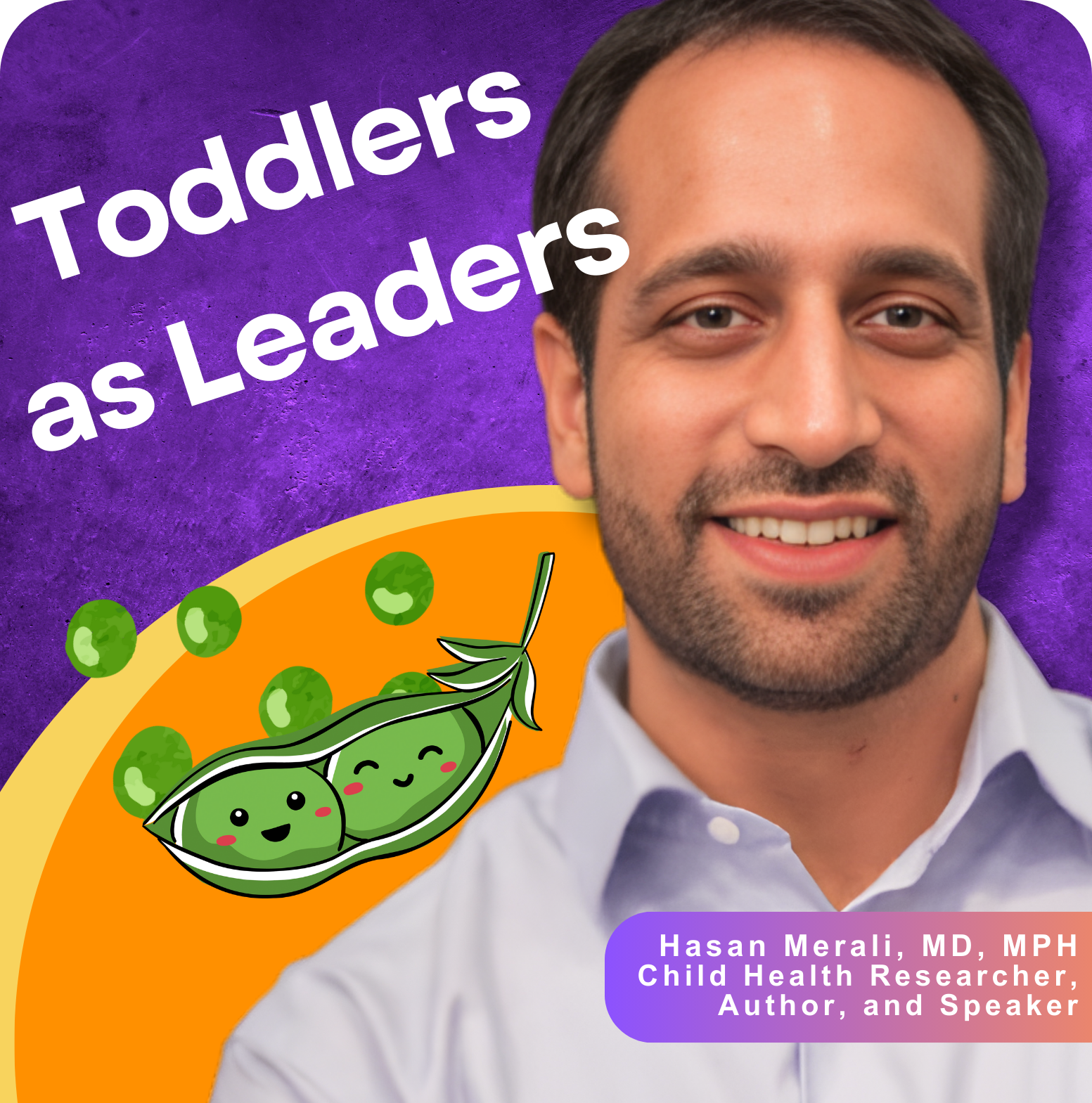
Dr. Hasan Merali is a Harvard and Johns Hopkins–trained pediatric emergency physician at McMaster Children’s Hospital, a researcher published in over 25 peer-reviewed journals, and the author of Sleep Well, Take Risks, Squish the Peas: Secrets from the Science of Toddlers for a Happier, More Successful Way of Life. Bridging medicine, neuroscience, and child development, he translates the everyday confidence, curiosity, playfulness, and emotional intelligence of toddlers into powerful, practical lessons for adult leadership, creativity, and teamwork. Much like a seasoned strategist translating inner clarity into external impact, Dr. Merali’s magic lies in reframing childhood not as a phase to outgrow, but as a wellspring of wisdom to return to, reminding leaders that many of the qualities they spend years trying to develop were already within them from the very beginning.
TEDx Talk: The Best Life Lessons From Toddlers
Website: HasanMerali.com
Creative Process
Discuss Potential Outlines: Dr. Jiani Wu, Kim Castro + ai
Create Initial Drafts & Iterate: Dr. Jiani Wu, Kim Castro + ai
Ensure Guest Alignment: Dr. Hasan Merali
Ensure Final Alignment: Dr. Jiani Wu
Initial Publication: Dec. 18, 2026
Disclaimer:
AI technologies are harnessed to create initial content derived from genuine conversations. Human re-creation & review are used to ensure accuracy, relevance & quality.
