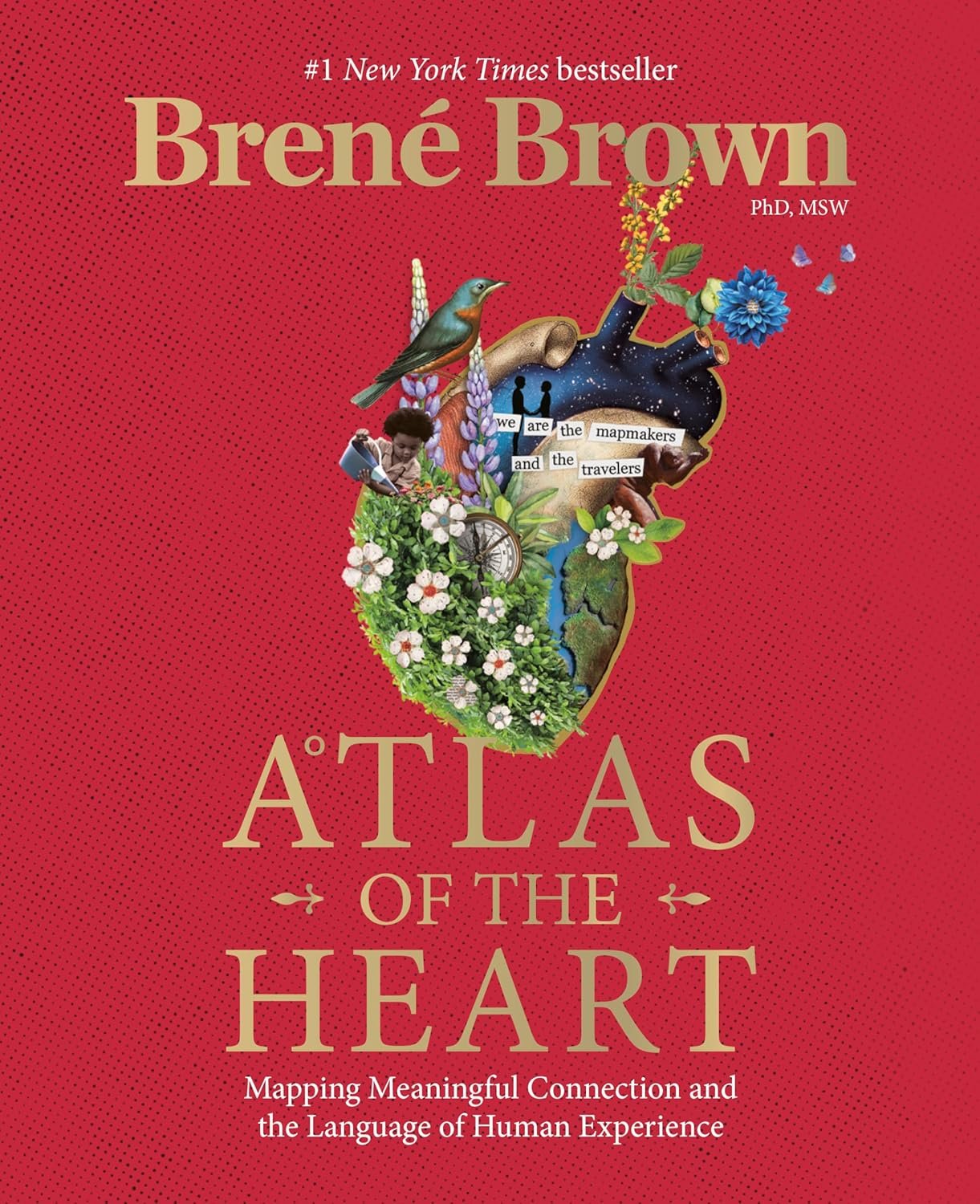
Atlas of the Heart | Brené Brown
Why it is here:
This is the dictionary of emotions.
Before we can build a thriving community, we must agree on the names of things.
Brown maps 87 distinct emotions and experiences, providing the high-resolution vocabulary required to navigate the human experience.
It sits in the Map Room because it acts as the Language Legend for the entire journey.
It ensures that when we talk about "Anguish" or "Vulnerability," we are all looking at the same coordinates.
It solves the "Tower of Babel" problem, allowing diverse teams to communicate their internal states accurately—a prerequisite for Flourishing.
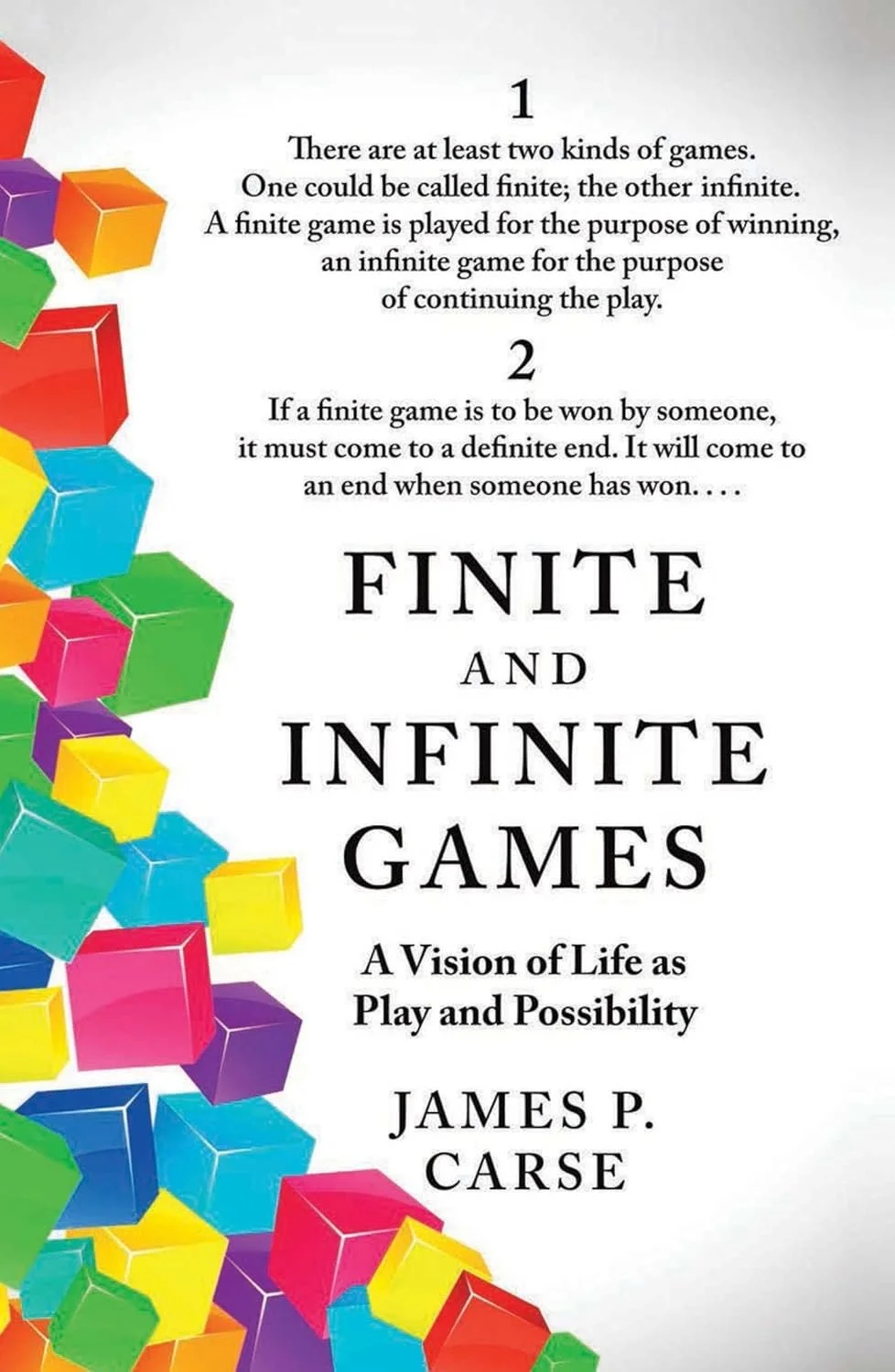
Finite and Infinite Games | James P. Carse
Why it is included:
This is the philosophical source code for the entire library.
Carse distinguishes between two types of games: Finite Games (played to win, ending in a victory or defeat) and Infinite Games (played for the purpose of continuing the play).
War, elections, and markets are Finite Games.
Culture, nature, and evolution are Infinite Games.
We include this to give the user the language to shift their primary motivation.
It teaches us to stop trying to "win" against each other and start playing to keep the game of life going.

The Dawn of Everything | David Graeber & David Wengrow
Why it is included:
This is a dense, academic text.
We include it because it dismantles the single biggest myth blocking our future: the idea that inequality and hierarchy are the inevitable price of "civilization."
Graeber and Wengrow use modern archaeology to prove that for 30,000 years, humans were conscious political experimenters.
Our ancestors built cities without kings, moved between hierarchies and egalitarianism seasonally, and played with social structures.
It proves we are not "stuck" in our current system by evolution; we are stuck because we have lost our political imagination.
This book gives us the historical precedent to reclaim it.
The Web of Meaning | Jeremy Lent
Why it is included: For centuries, we have been told we must choose between science (a meaningless, mechanical universe) and spirituality (a meaningful, pre-rational belief).
Jeremy Lent argues that this is a false choice. By rigorously integrating modern findings in systems biology, cognitive neuroscience, and complexity theory with the ancient wisdom of Buddhism, Taoism, and Indigenous knowledge, he constructs a solid, secular foundation for a life of meaning.
We include this because it provides the "New Operating System" for the human mind.
Lent dismantles the "selfish gene" and "separate self" myths, proving scientifically that we are "fractals of flourishing" embedded in a living web.
It is the essential text for anyone trying to understand how a scientific worldview can actually lead to a deep, sacred sense of connectedness, replacing the story of "separation" with the rigorous reality of "interbeing."
Finding Radical Wholeness | Ken Wilber
Why it is included: For decades, we relied on Wilber’s A Brief History of Everything for the map. But maps evolve. In this magnum opus, Wilber updates the "Integral Operating System" for a new era.
He synthesizes human potential into five specific practices: Waking Up (Spirituality), Growing Up (Emotional Intelligence), Cleaning Up (Shadow Work), Showing Up (Purpose), and Opening Up (Creativity).
It reminds us that we cannot just meditate (Wake Up) and ignore our trauma (Clean Up), or work on our career (Show Up) and ignore our ethics (Grow Up).
It provides the unified "Theory of Everything" for the human soul, ensuring that our transition to a thriving civilization is not just a technological upgrade, but a consciousness upgrade.
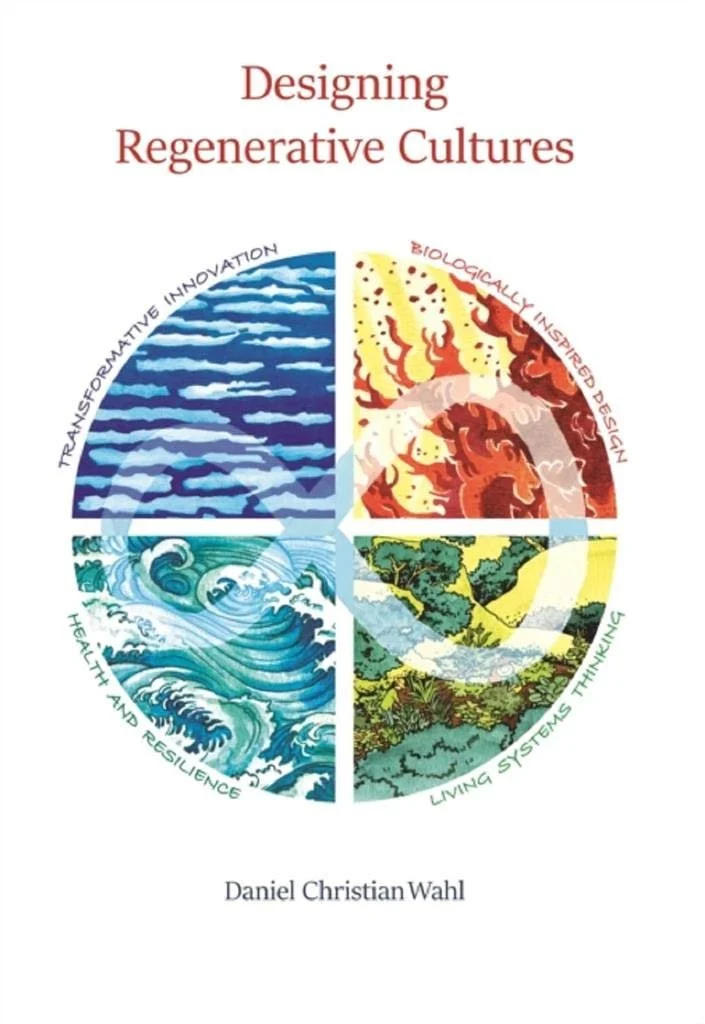
Designing Regenerative Cultures | Daniel Wahl
Why it is included: This is the master textbook for the "How." Wahl argues that "sustainability" is no longer enough—it is simply "doing less harm" or maintaining the status quo.
Because we have done so much damage, a thriving civilization is inevitably regenerative—it heals the systems it touches. We design economies, agriculture, and cities that leave the place better than we found it.
This book is included because it synthesizes biology, design, and sociology into a coherent framework.
Wahl asks the crucial question: "How can we create cultures that mimic the way life itself works?" It moves us from the mechanical questions of "efficiency" to the living questions of "vitality" and "resilience."
It is the blueprint for ensuring that our solutions are aligned with the 3.8 billion years of R&D that nature has already done.
The Great Work | Thomas Berry
Why it is included: Thomas Berry was a "geologian"—a monk who studied the earth. He reframes our current crisis not as a political or economic problem, but as a crisis of cosmology.
We don't know who we are or what we are doing here. Berry argues that we are currently a "disrupting force" on the planet, and our "Great Work" is to transition into a "benign presence."
It moves the conversation beyond "saving the environment" (which implies we are separate from it) to "participating in the dream of the Earth."
Berry gives us a new story of the universe where humans are not the rulers of the planet, but the universe is becoming conscious of itself. It provides the deep, soulful "Why" that is strong enough to sustain us through the difficult "How" of the transition.
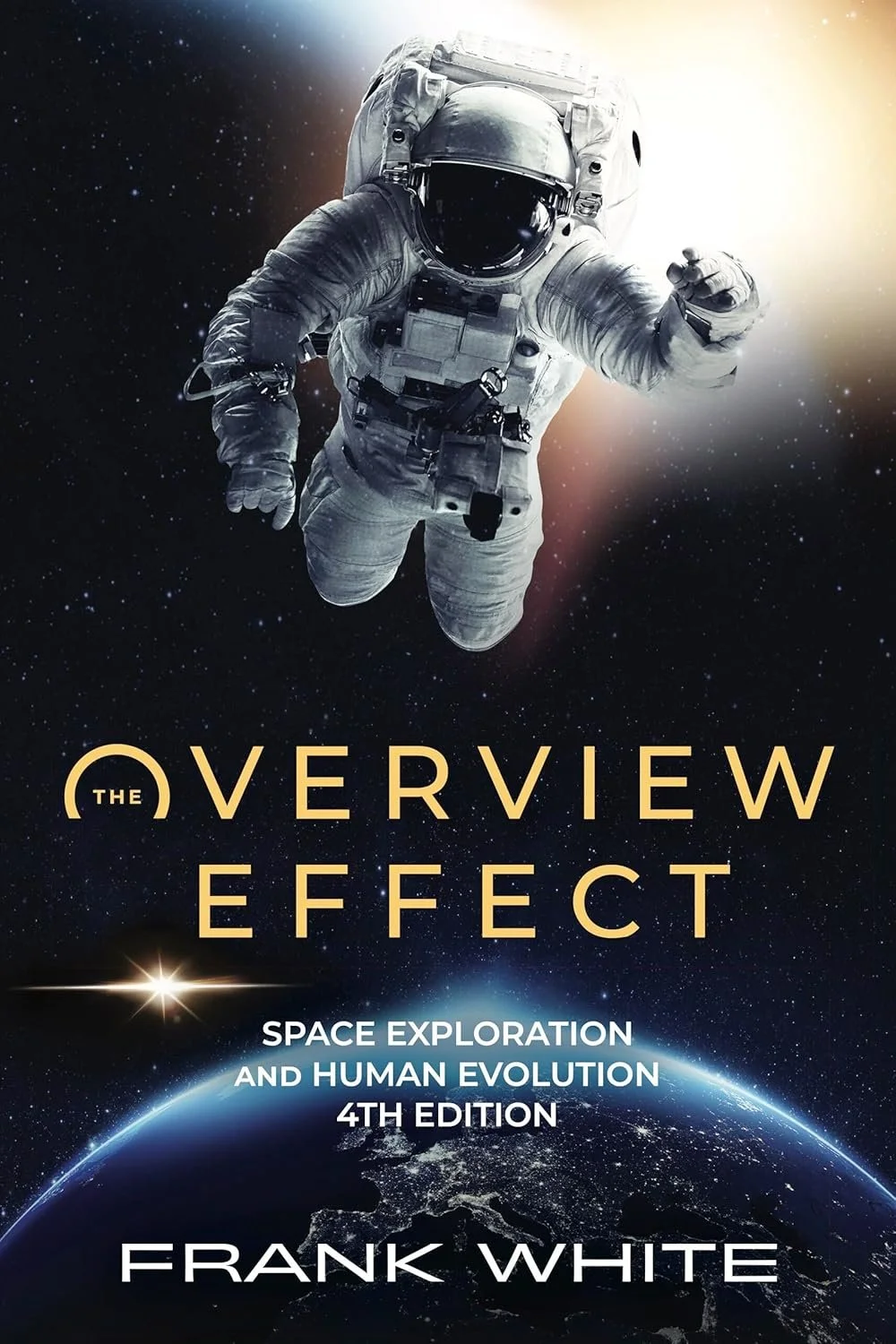
The Overview Effect | Frank White
Why it is here:
This is the psychological goal.
White documents the profound cognitive shift astronauts experience when viewing Earth from orbit—an instant realization of interconnectedness and the disappearance of national borders.
We include this to define the specific "State of Mind" required to build a Flourishing World.
It moves the concept of "planetary stewardship" from a political ideal to a biological imperative.
It reminds us that our current tribal bickering is a result of a limited perspective, and that a higher vantage point renders those conflicts obsolete.

Patterning Instinct: A Cultural History of Humanity's Search for Meaning | Jeremy Lent
Why it is included: While Harari looks at what happened, Jeremy Lent looks at how we thought about it. This book traces the cognitive history of humanity, specifically comparing the Western "dualist" worldview (mind vs. body, man vs. nature) with the Eastern "systems" worldview (everything is connected). Lent argues that our current ecological crisis is the inevitable result of a specific root metaphor: "Nature as Machine."
If we view the world as a machine, our goal is to hack it, extract from it, and control it. If we view it as a living organism, our goal is to harmonize with it. This book is included because we cannot build a regenerative civilization on extractive metaphors.
Lent provides the cognitive archaeology needed to dig up the deep-seated beliefs that drive our destructive behavior, offering a pathway to a thriving worldview based on connectivity and shared meaning.

Sapiens: A Brief History of Humankind | Yuval Noah Harari
Why it is included: To align with a thriving future, we first understand the "source code" of the past. Harari’s central thesis is that Homo sapiens dominates the planet not because we are stronger or smarter individually, but because we are the only species capable of believing in shared fictions. Money, corporations, nations, and human rights do not exist in the physical world; they exist only because we collectively agree they do.
This insight is the ultimate tool for a transition generation. It reveals that the systems we feel trapped by—capitalism, the nation-state, the legal system—are not laws of physics. They are stories. And stories can be rewritten. Sapiens permits us to look at our previous structures not as immutable realities, but as scripts that we have the power to edit. It is the foundational text for liberating the collective imagination.
Cosmos | Carl Sagan
Why it is here:
This is the secular scripture. While White describes the shift, Sagan helps us feel it.
He connects our personal lives to the 14-billion-year story of cosmic evolution, reminding us that we are "starstuff pondering the stars."
Crucially, his "Pale Blue Dot" passage acts as the "Overview Effect" for the rest of us.
It grounds us in deep scientific humility.
It is the necessary emotional counterbalance to the ego, reminding us that every "Supreme Leader" and "Superpower" in history has lived and died on a "mote of dust suspended in a sunbeam."
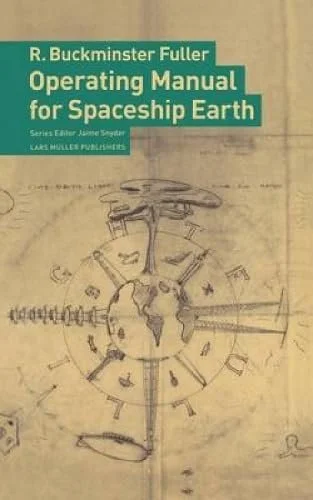
Operating Manual for Spaceship Earth | Buckminster Fuller
Why it is included: We often act as if we are on a planet with infinite resources and an invincible waste-disposal system. Fuller shatters this illusion with a single, powerful metaphor: Earth is a spaceship. It is a mechanical vessel traveling through the cold void of space, carrying a finite supply of air, water, and energy. No resupply missions are coming.
This book is the fundamental "engineering schematic" for the emerging civilization. Fuller argues that for most of history, humanity has acted as "passengers"—cluelessly consuming resources and fighting over the best seats. To survive the transition, we must graduate to become "crew." This means understanding the ship's regenerative systems and taking responsibility for its maintenance. It bridges the gap between ecology and engineering, demanding that we design our civilization with the same rigorous efficiency required for space travel. It is the ultimate call to stop treating the planet like a hotel and start treating it like a lifeboat.