
Visual Thinking | Temple Grandin
Why it is included:
The "Cognitive Corrective." Grandin argues that society—and our definition of "genius"—is biased toward Verbal Thinkers (linear, word-based).
But a flourishing civilization cannot be built on words alone; it requires Visual Thinkers (object and spatial processors) who can simulate complex systems, bridges, and code in their mind's eye.
We include this to ensure the kit honors the Engineers and Builders.
It reminds leaders that true "Imaginative Courage" requires diverse cognitive teams—blending the poets (who dream the future) with the visualizers (who can see the nuts and bolts required to hold it up).
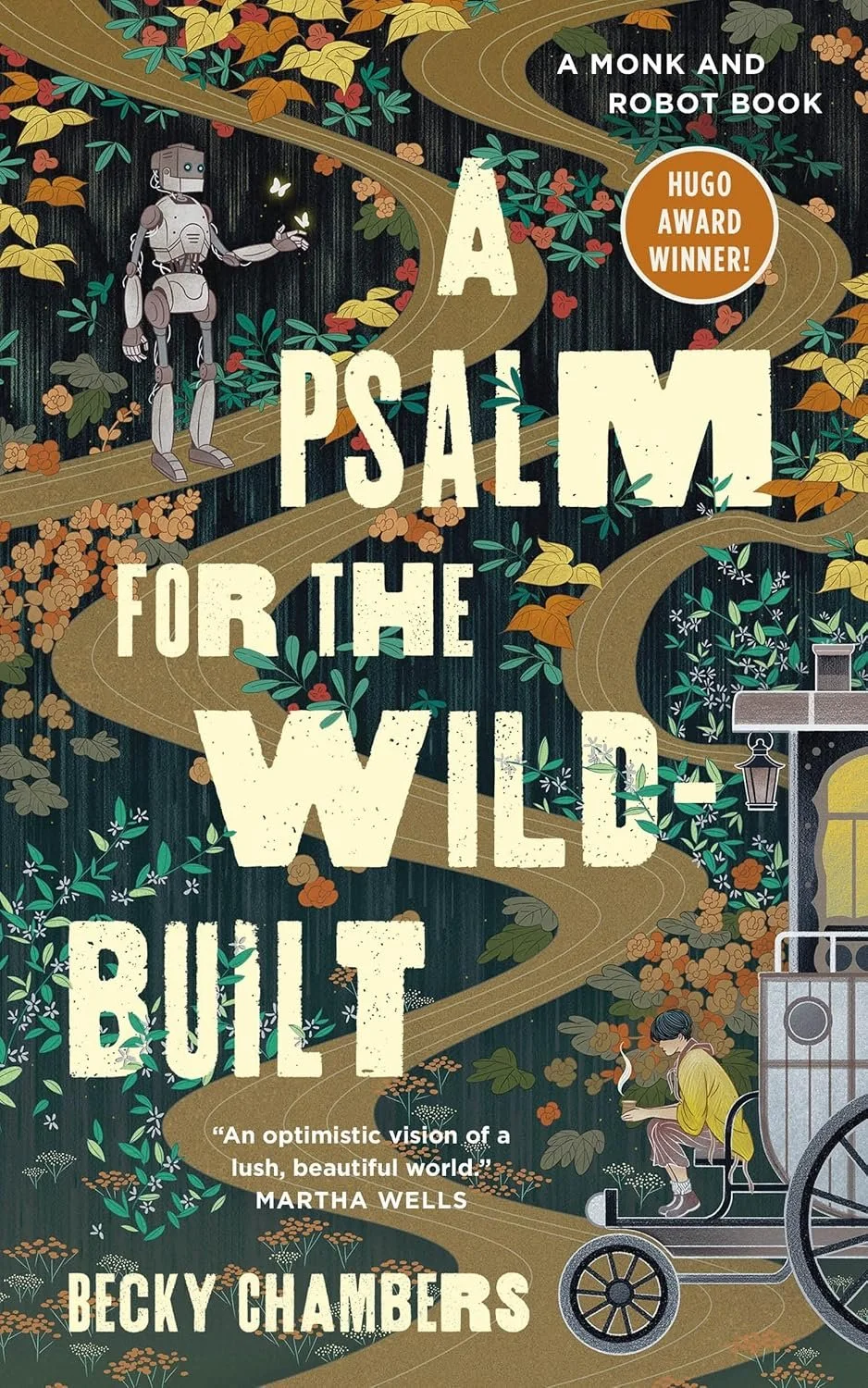
A Psalm for the Wild-Built | Becky Chambers
Why it is included:
This novella offers something that technical blueprints cannot: the sensory experience of a healed world.
While other books in this section focus on the struggle to save the planet, this story takes place after the victory.
It describes a "Solarpunk" future where humanity has solved its environmental crises and lives in a high-tech society that feels as gentle and organic as a forest.
We include it to provide an emotional "North Star."
It proves that a flourishing civilization doesn't have to be cold, sterile, or purely digital.
It gives the reader a tangible feeling of what we are working toward—a life where advanced technology and the natural world support each other in quiet, meaningful harmony.
Co-Intelligence | Ethan Mollick
Why it is included:
The "Synthetic Engine." We cannot talk about the future of creativity without addressing the alien intelligence in the room: Generative AI.
Mollick, a pragmatic Wharton professor, argues that we must treat AI not as a replacement, but as a "Co-Intelligence"—an infinite intern, a sparring partner, and a multiplier of human potential.
This book is the manual for the "Centaur" model of work (Human + Machine).
We include it to ensure the user is equipped with the most powerful creative tool of our time, learning to direct this new intelligence to solve problems that were previously unsolvable by biological brains alone.
Not the End of the World | Hannah Ritchie
Why it is included:
The "Reality Check." In a world drowning in "Doomerism," Hannah Ritchie provides the data to prove that we are already winning.
As the lead researcher at Our World in Data, she presents rigorous evidence that we have decoupled economic growth from carbon emissions and are approaching peak pollution.
We include this to provide the Factual Bedrock for our optimism. It proves that "Imaginative Courage" is not a delusion, but a statistically supported stance.
It transforms sustainability from a moral sacrifice into a solvable engineering problem, giving us the confidence to push through the final mile of the transition.
The Ministry for the Future | Kim Stanley Robinson
Why it is included:
The "Blueprint." This is the most important novel of our decade.
It moves us from "Apocalypse Anxiety" to "Solution Architecture." It invites us to imagine how a flourishing civilization actually governs itself, creates new money (the Carbon Coin), and creates a legal truce with the biosphere.
It is not a utopia; it is a gritty, realistic manual for the transition.
We include it because it restores Agency, proving that the future is not something that happens to us, but something we can actively engineer through bureaucracy, technology, and courage.
Invisible Cities | Italo Calvino
Why it is included:
The "Dream Architecture." In this surrealist masterpiece, Marco Polo describes 55 imaginary cities to Kublai Khan—cities made of webs, memories, and desires.
We include this to ensure our imagination doesn't become purely utilitarian.
A flourishing civilization isn't just about efficient solar grids; it is about creating habitats for the human spirit.
Calvino trains our "Aesthetic Intelligence," teaching us to see cities not just as infrastructure, but as living repositories of human culture and dreams.
It expands the boundaries of what we believe is possible to build.
The Sense of Wonder | Rachel Carson
Why it is included:
The mother of the modern environmental movement argues that for the child—and the adult—"feeling is more important than knowing."
She provides the "Biophilic Anchor," reminding us that we cannot save a world we do not love.
This lyrical manifesto ensures that our "Imaginative Courage" is rooted in a primal, sensory connection to the living Earth.
It is the antidote to the "disenchantment" of the digital age, grounding our future visions in the smell of wet soil and the sound of the ocean.

Sand Talk | Tyson Yunkaporta
Why it is included:
We cannot build the future using only the linear thinking that broke the present.
Yunkaporta, an Indigenous academic, applies Aboriginal Complexity Theory to modern problems.
He critiques the obsession with isolation and extraction, offering instead a model of "Relational Reality"—where nothing exists in isolation.
This is the perfect counterweight to Western science.
It teaches us how to think in loops, systems, and deep time.
It is a manual for "pattern thinking," ensuring that our solutions don't just solve a narrow problem but integrate harmoniously with the complex living systems of the Earth.

Awe: The New Science of Everyday Wonder | Dacher Keltner
Why it is included:
This book provides the biological key to unlocking flourishing thinking.
Keltner, a founding director of the Greater Good Science Center, presents the hard science proving that Awe is not just a fleeting emotion, but a fundamental survival mechanism.
He demonstrates that experiencing awe—whether through nature, music, or moral beauty—physically quiets the brain's "default mode network" (the seat of the ego and self-criticism) and activates the systems responsible for collaboration and openness.
We include it because building a new world requires a cognitive shift from "Me" to "We."
This book teaches that we do not need to wait for a grand epiphany to access this state; we can cultivate it as a daily practice. It is the essential fuel that prevents cynicism and keeps the mind open to the vast, interconnected possibilities of the future.

Your Brain on Art | Susan Magsamen & Ivy Ross
Why it is included:
This book bridges the gap between hard science and daily experience.
Magsamen and Ross introduce the field of Neuroaesthetics, proving that the arts are not merely "nice to have" luxuries, but biological necessities that physically rewire our brains for health, learning, and longevity.
It is the manual for a thriving culture.
It reminds us that the environments we build—our cities, schools, and homes—shall be designed to optimize human biology through sensory richness.
It transforms "Art" from a leisure activity into a public health strategy, validating the intuition that beauty is a functional requirement for a thriving civilization.

The Cambridge Handbook of Creativity | Dr. James Kaufman & Robert J. Sternberg (Editor)
Why it is included:
This is the scientific anchor of the entire section.
We include it to debunk the dangerous myth that creativity is a mystical gift bestowed upon a chosen few. This comprehensive volume aggregates decades of research from neuroscience, psychology, and sociology to prove that creativity is a measurable, trainable cognitive process—a mix of divergent thinking, pattern recognition, and domain knowledge.
In a flourishing civilization, innovation cannot be sporadic; it must be systemic.
This handbook provides the "Physics of Imagination," offering the rigorous data required to move us from "waiting for inspiration" to "engineering innovation."
It validates that imaginative courage is not a hobby, but a fundamental function of the healthy human mind.

Creativity: The Psychology of Discovery and Invention | Mihaly Csikszentmihalyi
Why it is included:
Based on interviews with 91 visionaries (Nobel laureates, artists, leaders), Csikszentmihalyi maps the "Systems Model of Creativity."
He proves that genius is not found inside a single skull, but in the interaction between the Person, the Field (the gatekeepers), and the Domain (the culture).
This is crucial for "Co-Creative Collaboration."
It teaches us that to co-evolve with the world, aside from a bright idea, we shall learn how to navigate the social systems that validate and spread that idea.

Wired to Create | Dr. Scott Barry Kaufman & Carolyn Gregoire
Why it is included:
The "Validation."
If the Handbook is the hardware, this is the user experience.
It explores the messy, paradoxical habits of the creative mind—imaginative play, solitude, sensitivity, and daydreaming.
We include it to reassure the user that their "scattered" or "sensitive" nature is not a bug, but a feature of the innovation engine.
It validates the Creative Lifestyle, proving that behaviors often dismissed as "unproductive" (like staring out a window) are actually essential phases of the cognitive process.

The Neuroscience of Creativity | Anna Abraham
What happens in our brains when we compose a melody, write a poem, paint a picture, or choreograph a dance sequence? How is this different from what occurs in the brain when we generate a new theory or a scientific hypothesis?
In this book, Anna Abraham reveals how the tools of neuroscience can be employed to uncover the answers to these and other vital questions. She explores the intricate workings of our creative minds to explain what happens in our brains when we operate in a creative mode versus an uncreative mode. The vast and complex field that is the neuroscience of creativity is disentangled and described in an accessible manner, balancing what is known so far with critical issues that are as yet unresolved. Clear guidelines are also provided for researchers who pursue the big questions in their bid to discover the creative mind.
The Cambridge Handbook of the Imagination | Anna Abraham (Editor)
Why it is included:
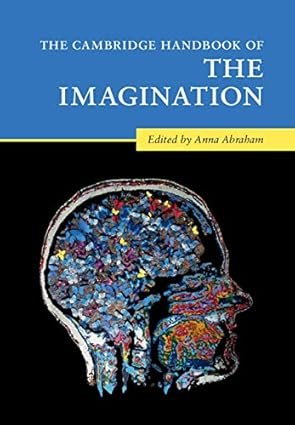
While "Creativity" is about producing external results, "Imagination" is about the internal simulation of new realities.
This volume serves as the necessary companion to the first handbook, focusing on the neuroscience of the "Default Mode Network" and counterfactual thinking—the brain's ability to ask "What if?"
Before we can terraform a planet or redesign an economy, we must be able to run high-fidelity simulations in the mind's eye.
This book explains the cognitive machinery that allows humans to decouple from the present moment and inhabit the future, providing the scientific basis for all visionary leadership.

Learning to Imagine | Dr. Andrew Shtulman
Why it is included:
It challenges the popular Romantic myth that children are "creative geniuses" and adults are "blocked."
Shtulman uses cognitive science to prove the opposite: Knowledge expands Imagination.
He demonstrates that children’s imagination is actually limited by their lack of understanding of how the world works, while deep study and expertise provide the raw materials for true innovation.
We include this to encourage the rigorous acquisition of knowledge.
It teaches us that "Imaginative Courage" is not about abandoning logic, but about using a deep understanding of the laws of physics and nature to bend them into new possibilities.

What Do You Do With an Idea? | Kobi Yamada
Why it is included:
In a library full of complex science and heavy policy, this simple picture book serves as the emotional heart.
We include it because new ideas—especially the ones that can change the world—are not born strong; they are born fragile. They can feel strange, silly, or lonely, and it is easy to let them go when others laugh.
This story reminds us that innovation doesn't start with a grand master plan; it starts with a tiny spark that needs protection.
It teaches even the most sophisticated leader to treat their own "baby ideas" (and the ideas of their team) with kindness and patience, trusting that if you give a strange little notion enough room to grow, it might eventually become everything.

Abundance | Ezra Klein + Derek Thompson
Abundance explains that our problems today are not the results of yesteryear’s villains. Rather, one generation’s solutions have become the next generation’s problems. Rules and regulations designed to solve the problems of the 1970s often prevent urban-density and green-energy projects that would help solve the problems of the 2020s. Laws meant to ensure that government considers the consequences of its actions have made it too difficult for government to act consequentially. In the last few decades, our capacity to see problems has sharpened while our ability to solve them has diminished.
Progress requires facing up to the institutions in life that are not working as they need to. It means, for liberals, recognizing when the government is failing. It means, for conservatives, recognizing when the government is needed. In a book exploring how we can move from a liberalism that not only protects and preserves but also builds, Klein and Thompson trace the political, economic, and cultural barriers to progress and propose a path toward a politics of abundance. At a time when movements of scarcity are gaining power in country after country, this is an answer that meets the challenges of the moment while grappling honestly with the fury so many rightfully feel.

Visual Thinking: The Hidden Gifts of People Who Think in Pictures, Patterns, and Abstractions
It all begins with an idea.